0


 English
 Español
How the Material Is Built
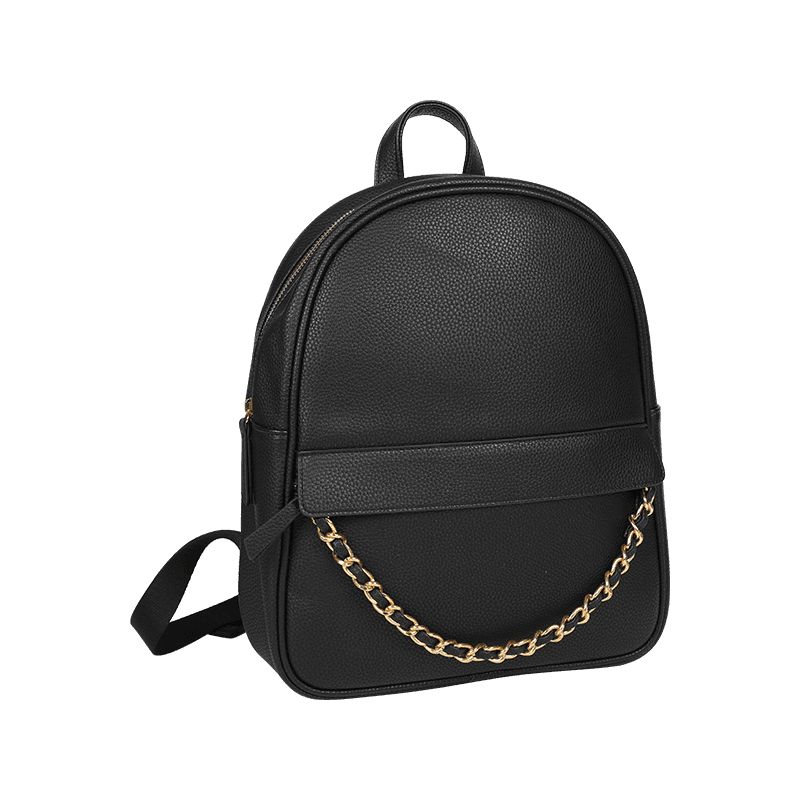
The base of a PU leather backpack is typically a woven or non-woven fabric that provides tensile strength. Onto that base, a polyurethane coating is applied in one or more layers, sometimes with a surface treatment that adds grain texture or a matte finish. The coating delivers the look and the water resistance; the fabric delivers the tear strength. This layered structure is why a PU leather backpack can hold a rigid shape while still flexing at the seams when the bag is full.
The coating also determines how the surface feels. A thinner coating gives a softer hand and a more pliable bag; a thicker coating produces a firmer panel that holds its silhouette. Neither is inherently superior. A PU leather backpack designed for a laptop and notebooks often uses a firmer coating so the bag stands upright on a desk, while a casual daypack may use a softer coating that collapses neatly when set down.
Structure Without Stiffness
A PU leather backpack sits in a useful middle ground. It holds shape better than a soft canvas bag, so the front panel does not sag into a puddle when the bag is half empty. At the same time, it bends at the shoulder straps and the top opening, so it does not feel like carrying a box.
That balance comes from the way panels are cut and backed. Many PU leather backpack designs use a foam or board interlayer behind the coated fabric on the front and back panels, giving the bag a defined outline. The side panels often skip that interlayer, which lets the bag compress slightly when squeezed into an overhead bin or under a train seat. The result is a bag that reads as structured from the outside but tolerates real-world handling.
Pockets and the Logic of Layout
A PU leather backpack often carries a business-casual look, and buyers expect the interior to match. The layout usually separates a padded laptop sleeve from a main compartment, with smaller pockets for cables, a wallet, and a phone. Exterior pockets vary: some designs use a flat zip pocket on the front, while others add a side pocket sized for a compact umbrella or a water bottle.
The material affects pocket design more than people realize. Because the coated fabric is firmer than canvas, a PU leather backpack can support a structured front pocket without extra reinforcement. That same firmness means the pocket does not stretch, so it suits flat items better than bulky ones. A well-planned PU leather backpack uses this property deliberately, placing slim pockets where structure helps and soft pockets where flexibility matters.
Seams, Zippers, and Hardware
Seams on a PU leather backpack need care because the coating does not fray the way woven fabric does, but a poorly finished seam can still pull. Stitching density and thread choice affect how the bag handles load at the strap anchors, which is where stress concentrates.
Zippers and hardware complete the picture. A PU leather backpack typically uses metal zipper pulls and buckles that match the coating's finish, whether brushed, matte, or dark. These details age at a different rate than the coated fabric, and a bag with sturdy hardware tends to keep its appearance longer than one where the fittings dull or loosen early.